Friday, May 8th, 2009
I don’t have health insurance right now. Not that this is a new experience. I suppose my parents and I have saved a bundle that we didn’t have in the first place to protect against things that for the vast majority of the time didn’t happen. But it’s a life where accidents can not happen.
My brief exposure to middle class American health insurance actually was pretty disappointing. I figured for all that money you’d be getting some serious service. Not really. It was far more hassle than the free clinics that I have been to. I’m really quite infuriated at the bloat and inefficiency, and how each cog goes on their merry way piling on the huge bills with a topping of repeated mistakes that I’m left to wade through.
So the US’s health care system is broke and makes me whine. It’s bigger than that, though. As a nation, and personally, we are looking down the slope of destitution and seeing how very little is protecting us from snowballing down. Pinellas County has gone from 5,500 homeless a year ago to 7,500 this year.
All this is making how the Germans and Dutch handle public services look extremely attractive. That peace of mind is such a powerful thing to provide for the whole country. Talk about a making a real impact, if not to ending, then improving poverty. What a noble endeavor.
From Wiki:
The World Health Organization (WHO), in 2000, ranked the U.S. health care system as the highest in cost, first in responsiveness, 37th in overall performance, and 72nd by overall level of health (among 191 member nations included in the study).
…
As a proportion of GDP, public health care spending in the United States is larger than in most other large Western countries.
…
According to the Institute of Medicine of the National Academy of Sciences, the United States is the “only wealthy, industrialized nation that does not ensure that all citizens have coverage” (i.e. some kind of insurance).
I’m not trying to make the argument that everybody else is doing this so we should too, but I would like to point out that it seems like providing public health care is not something that everyone else has found to be insurmountable. And they seem to be managing it for cheaper than we are.
No, that peace of mind isn’t free by a long shot. The Dutch pay around 52% of their income in taxes. When life is going great, you’re healthy, your boss loves you and the business is thriving, that 52% doesn’t do much work for you, personally. What you get, however, is support when your luck turns and you have the least resources with which to help yourself. There is no precipice. We’ll see for how long these European systems can support their entire country going into what, for us at least, is a once in a century slump, but from the anecdotes I’ve been reading, we’re already in trouble, watching the tent cities spring up, while the quality of life hasn’t dropped much in Germany or the Netherlands.
Friday, May 8th, 2009
A tomato update:
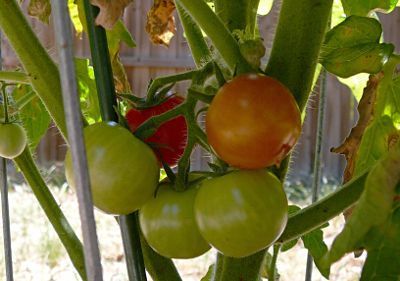
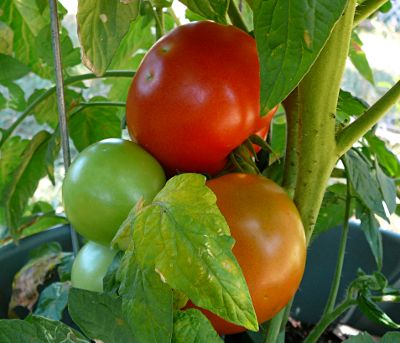
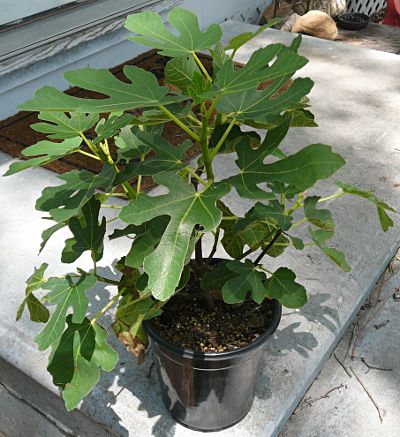
Sprayed some dangerous sounding Dithane M-45 on the fig today. Turns out the Neem we already had might have worked as well. It will be a few days before we can tell if the plant is any healthier. It’s lost maybe a quarter of its leaves since we bought it at this point.
Thursday, May 7th, 2009
Last weekend we went to Weedon Island. It has approximately 3,700 acres of mangroves and uplands along the Bay, with several trails and boardwalks running through it. The mosquito ditching done in the 1950’s is clearly visible from Google satellite:
The ditches seem rather controversial in the northeast, particularly around Rhode Island, but comments from west central Florida sound more positive. While obviously ditching intentionally affects habitat, it seems Floridians don’t mind the resulting mangroves for the most part. My hatred for mosquitoes overrides my usual preserve the environment philosophy, and I’m all for destroying every last one if we could do that selectively. I find it terribly unfortunate that mosquitoes have ended up much more difficult to erradicate than the inoffensive passenger pigeon. Mosquito fish can find something else to eat. Instead of pesticides, we can spray fish food if needed. I’m only half kidding. Or, I could continue to only go outside in the beating heat of the most intense sun of the day for my mosquito repellent. Otherwise I’m left to drenching myself in lemon-eucalyptus oil.
It looks like the park may actually be more accessible via canoe trails than foot paths. You’d get more shade that way too. However, from a canoe you don’t get to look straight down into the water to see the fishies.
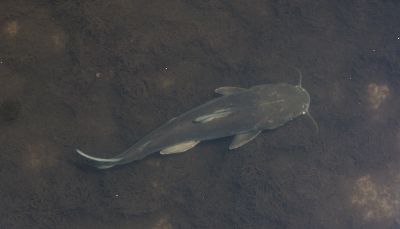
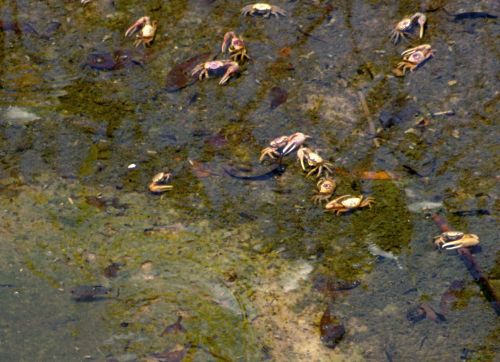
There are lots of crabs. Most of them small, though we saw a larger blue one from the same platform that we watched the catfish from. These were taunting the small fish frantically guarding its fish bed (lower left):
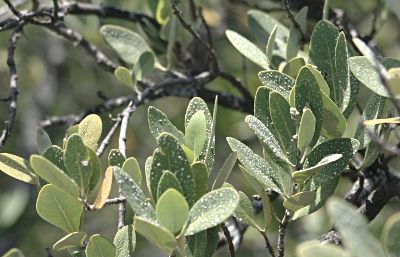
Here’s a closeup of how the mangroves handle the salt water — they sweat it out on their leaves:
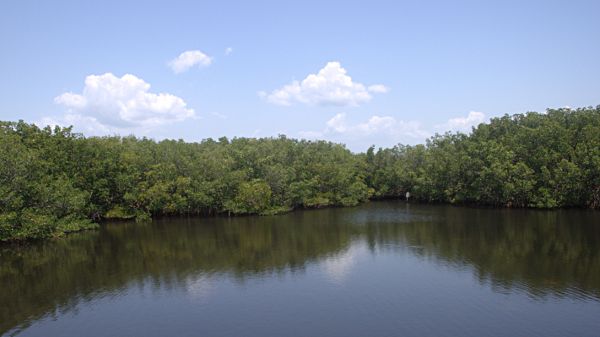
Mangroves not close up, from the fish/crab viewing platform:
Monday, May 4th, 2009
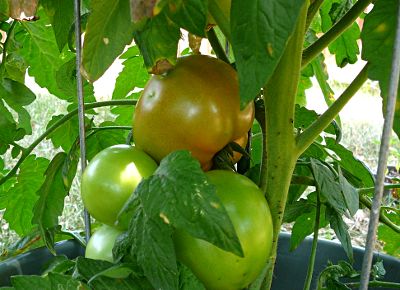
Our very first tomato, on the bush goliath, is starting to turn. It’s been 5 and a half-ish weeks since the fruit first formed.
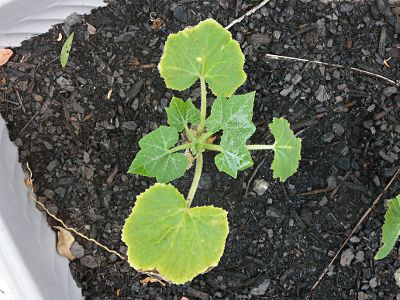
We pulled up most of the sad tomatoes and the watermelons, which were showing absolutely no signs of new growth. The yellow summer squash, after each deciding to send out a single, pointless flower, have now, happily, turned to sending out new leaves, which are all still small but a much healthier shade of green, and more encouraging than most anything else that we’ve started from seed. I’m hypothesizing that the larger pots, put in more shaded areas, don’t get as hot as the first pots that we transplanted to.
Our second round of seedlings, which we’ve been keeping inside longer in at attempt to protect them from the mean outside world, have what are probably fungus gnats. I’m balking at paying ~ $12 (half of that is shipping) for a half dozen pieces of sticky yellow paper to catch them, but if the local garden center doesn’t carry it, I guess that’s what we’ll be doing. Making sure the soil dries out between watering is supposed to ensure the larva can’t survive, as well.
We bought a brown turkey fig at the farmer’s market this weekend. It has some leaf rust, which looks like is controlled with copper spray. From the pictures I’ve seen, they can bear fruit while still reasonably small.
Thursday, April 30th, 2009
This is a bit late as I got sick and then started working on a new WordPress template to accommodate pictures larger than 400 px. These are shots of the flooded Santa Fe and Suwannee rivers right after cresting 2 weekends ago.
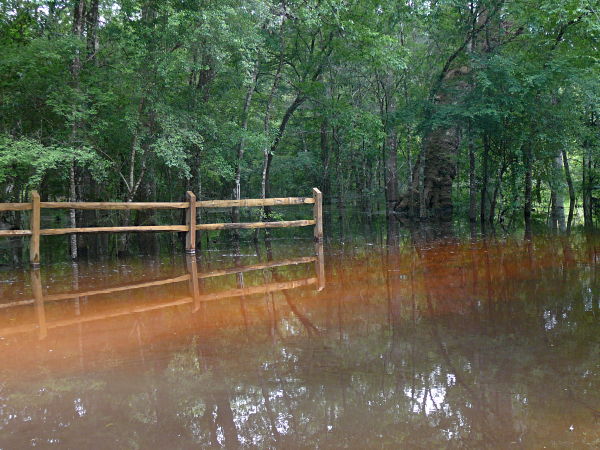
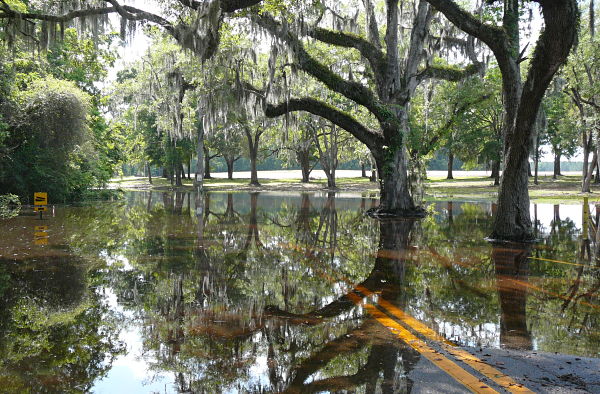
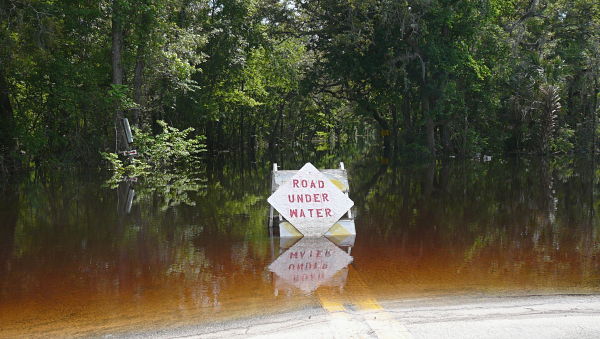
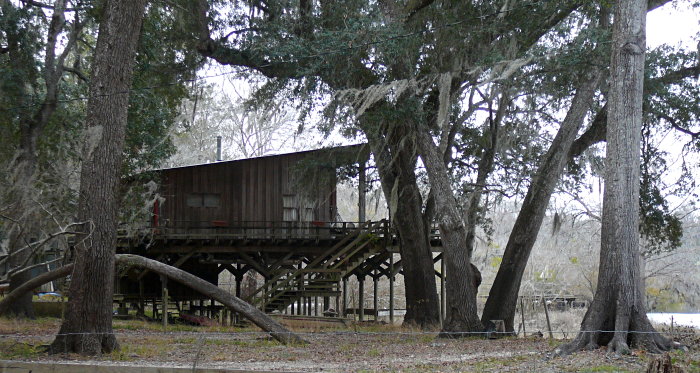
The flood water is still and not muddy, but is tinted rusty brown from decaying vegetation tannins. This is a flood prone area, with this flood reaching about once in a decade levels. Current river levels can be found here. Many of the houses are on stilts (this last picture was taken in December, whereas a few weeks ago this house was only accessible by boat):
Wednesday, April 15th, 2009
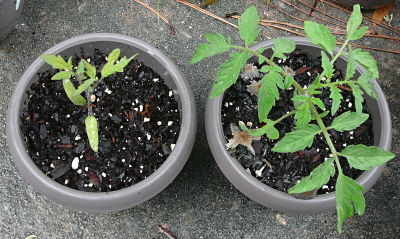
These are two of our from-seed tomatoes (both planted at the same time). The one on the right is our sole moderately happy Quarter Century (and some rain ravaged volunteer mushrooms). I don’t remember what the other one is, but the rest all look the same. I think their color might have improved a bit since we improved their pots’ drainage, but none have decided to perk up and send out some actually healthy looking leaves.
Mike planted some new tomatoes and herbs. Perhaps too late to get established before the real heat sets in, but they give you an army of seeds in those packets from the hardware store, so we might as well try.



